


Festival Period: January 31 – February 8, 2026 | Location: Taebaek, Gangwon-do | Best For: Families, snow activities, winter photography
Taebaek sits at 700 meters above sea level—the highest city in South Korea. That altitude means one thing: real snow, and plenty of it. The 33rd Taebaeksan Snow Festival transforms the area around Taebaeksan National Park into a full-scale winter playground, complete with massive snow sculptures, sledding hills, and indoor activity zones. Around 1 million visitors make the trip each year (Taebaek City Tourism Office, 2024). Here's what to expect and how to plan your visit.

The official 2026 festival poster captures the spirit of Taebaek's winter celebration—snow sculptures, sledding, igloos, and the iconic mountain backdrop all in one frame.
At a Glance
| Festival Period | January 31 – February 8, 2026 |
| Location | Taebaeksan National Park area, Taebaek City (`태백산국립공원 일원`) |
| Hours | 9:00 AM – 6:00 PM daily |
| Admission | Free entry; some activities ₩3,000–10,000 (~$2–7 USD) |
| Time Needed | 3–5 hours |
| Best Time to Visit | Weekday mornings, 10:00 AM – 1:00 PM |
Why Taebaek Gets the Snow Right
Most Korean snow festivals rely on artificial snow machines. Taebaek doesn't have that problem. The city regularly drops below -10°C in January, and natural snowfall blankets the region throughout winter. The festival tagline—"REAL"—isn't just marketing. The snow sculptures hold their shape. The sledding hills stay packed. The cold bites, but that's part of the deal.
The festival launched in 1994, originally designed to boost winter tourism to this former coal-mining town. Thirty-three years later, it ranks among Korea's top winter events.
The Snow Sculpture Village
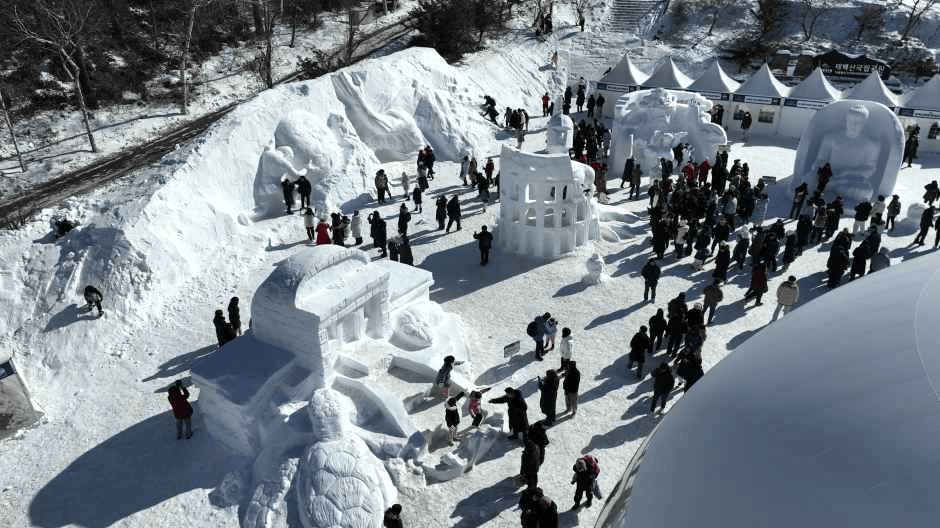
The centerpiece of the festival sits at Danggol Square (당골광장), where artists spend weeks carving enormous sculptures from compacted snow.

Crowds gather around the snow sculpture exhibition at Danggol Square—each year brings new designs ranging from traditional Korean motifs to pop culture characters.
This year's display typically includes 20–30 large-scale works. Past editions have featured Korean folklore characters, famous landmarks, animals, and cartoon figures. The sculptures range from 3 to 8 meters tall. Walking through feels like wandering an open-air gallery, except everything is white and gradually melting.
Pro tip: Morning light between 10:00–11:00 AM creates the best contrast for photographing the sculptures. Overcast days actually help—no harsh shadows.
Visitors can climb on designated sculptures, slide down snow slides built into larger installations, and take photos with the works. Just watch your step; packed snow gets slippery.
Snow Sledding Hills
Two words define the sledding experience: fast and crowded.

The main sledding hill draws families throughout the day—tubes and traditional sleds available for rent at the top.
The main hill (눈썰매장) runs about 50 meters with multiple lanes. Sleds and tubes rent for ₩5,000–8,000 (~$3.50–5.50 USD) for unlimited runs during your session. Lines move quickly on weekdays; weekends mean 15–20 minute waits.
A smaller kids' hill operates nearby for children under 6. The gentler slope keeps things safe for first-timers.
Timing matters. The hills get icy and fast in the morning, softer and slower by afternoon as foot traffic and sun exposure take their toll. Early arrivals get the best conditions.
The Indoor Family Zone
Not everything happens in the cold. A large dome tent (에어돔) houses the family activity area—a welcome retreat when fingers go numb.

Inside the heated dome, children dig into kinetic sand pits while parents warm up—the 2025 festival marked the 32nd edition.
The indoor zone rotates activities each year, but typical offerings include sensory sand play tables for young children, craft stations, and warming areas with seating. The heated space stays around 15–18°C—comfortable enough to remove gloves and jackets.

A balloon artist draws crowds inside the dome—interactive performances run throughout the day.
Street performers work the dome throughout the festival. Balloon artists, magicians, and musicians rotate through scheduled shows. Check the daily program board near the entrance for timing. Most performances run 20–30 minutes and draw standing-room crowds.
Downtown Taebaek: The Urban Trekking Course
The festival grounds connect to a walking route through Taebaek's downtown, linking several local attractions worth exploring before or after the main event.

The downtown trekking course connects local cafes, Hwangji Market, Hwangji Pond, the Coal Museum, and scenic viewpoints.
Hwangji Market (황지시장) sells hot street food—perfect for warming up. Fish cakes (eomuk), hotteok (sweet pancakes), and sundae (blood sausage) go for ₩2,000–5,000.
Hwangji Pond (황지연못) sits at the center of downtown. The spring-fed pond served as the town's historical water source. A quick photo stop; nothing more.
Coal Museum (석탄박물관) tells the story of Taebaek's mining heritage. The region powered Korea's industrialization from the 1960s through the 1980s. Admission runs ₩2,000 for adults. Worth 30–45 minutes if the weather turns harsh.
Local cafes dot the route. Taebaek's cafe scene has grown in recent years, with several spots offering mountain views and warming drinks.
The full loop takes 2–3 hours at a relaxed pace.
Getting There
Taebaek sits in the eastern mountains of Gangwon-do, about 4–5 hours from Seoul by public transport.
By Train: Take the Taebaek Line from Cheongnyangni Station (청량리역) in Seoul. The scenic route winds through mountain valleys for approximately 4 hours. Trains run 4–5 times daily; check Korail schedules and book ahead during festival dates. One-way tickets cost ₩25,000–30,000 (~$17–21 USD).
By Bus: Express buses depart from Seoul's Dong Seoul Terminal (동서울터미널) and take roughly 3.5 hours. Buses run hourly; fares around ₩22,000–26,000.
By Car: The drive from Seoul takes 3–3.5 hours via the Yeongdong Expressway and Route 38. Festival parking fills quickly on weekends—arrive before 10:00 AM or use the shuttle service from downtown parking areas.
From Taebaek Station or the bus terminal, taxis to the festival grounds run about ₩8,000–10,000. Local buses also operate, but schedules are irregular.
Planning Your Visit: What to Know
Dress for -10°C or colder. Taebaek's altitude means temperatures 5–8 degrees lower than Seoul. Thermal layers, waterproof boots, and hand warmers are essential. Bring spare gloves—wet gloves in freezing weather ruin the day fast.
Weekends bring serious crowds. The first and last weekends of the festival hit peak attendance. For a calmer experience, visit Tuesday through Thursday.
Food options exist but stay basic. Festival vendors sell typical Korean snacks: tteokbokki, fish cakes, hodugwaja (walnut cookies). For a proper meal, head to Hwangji Market or downtown restaurants.
Bring cash. Many vendors and smaller attractions don't accept cards. ATMs are available at convenience stores near the entrance.
Check snow conditions. In unusually warm years, some activities scale back. The festival's official social media posts updates on conditions.
Plan for 3–5 hours minimum. Between the sculpture village, sledding, and indoor activities, a full experience takes half a day. Add the downtown trekking course for a full-day trip.
Is It Worth the Trip?
Go if: You want authentic snow without flying to Hokkaido. Taebaek delivers the real thing—cold, white, and abundant. Families with kids will find enough activities to fill a full day. Photography enthusiasts get clean winter landscapes without the crowds of ski resorts.
Skip if: You're looking for après-ski nightlife or luxury accommodations. Taebaek is a small mountain town, not a resort destination. The journey from Seoul also demands commitment—this isn't a quick afternoon trip.
For travelers willing to make the trek, Taebaeksan Snow Festival offers something increasingly rare in Korea's winters: snow you can trust.
📌 Quick Reference Card
| Item | Details |
| Festival Name | Taebaeksan Snow Festival (`태백산눈축제`) |
| Dates | January 31 – February 8, 2026 |
| Location | Taebaeksan National Park area, Taebaek City |
| Admission | Free (paid activities ₩3,000–10,000) |
| Hours | 9:00 AM – 6:00 PM |
| Official Info | Taebaek City Tourism / Gangwon Tourism |
| Best For | Families, winter photography, snow activities |