

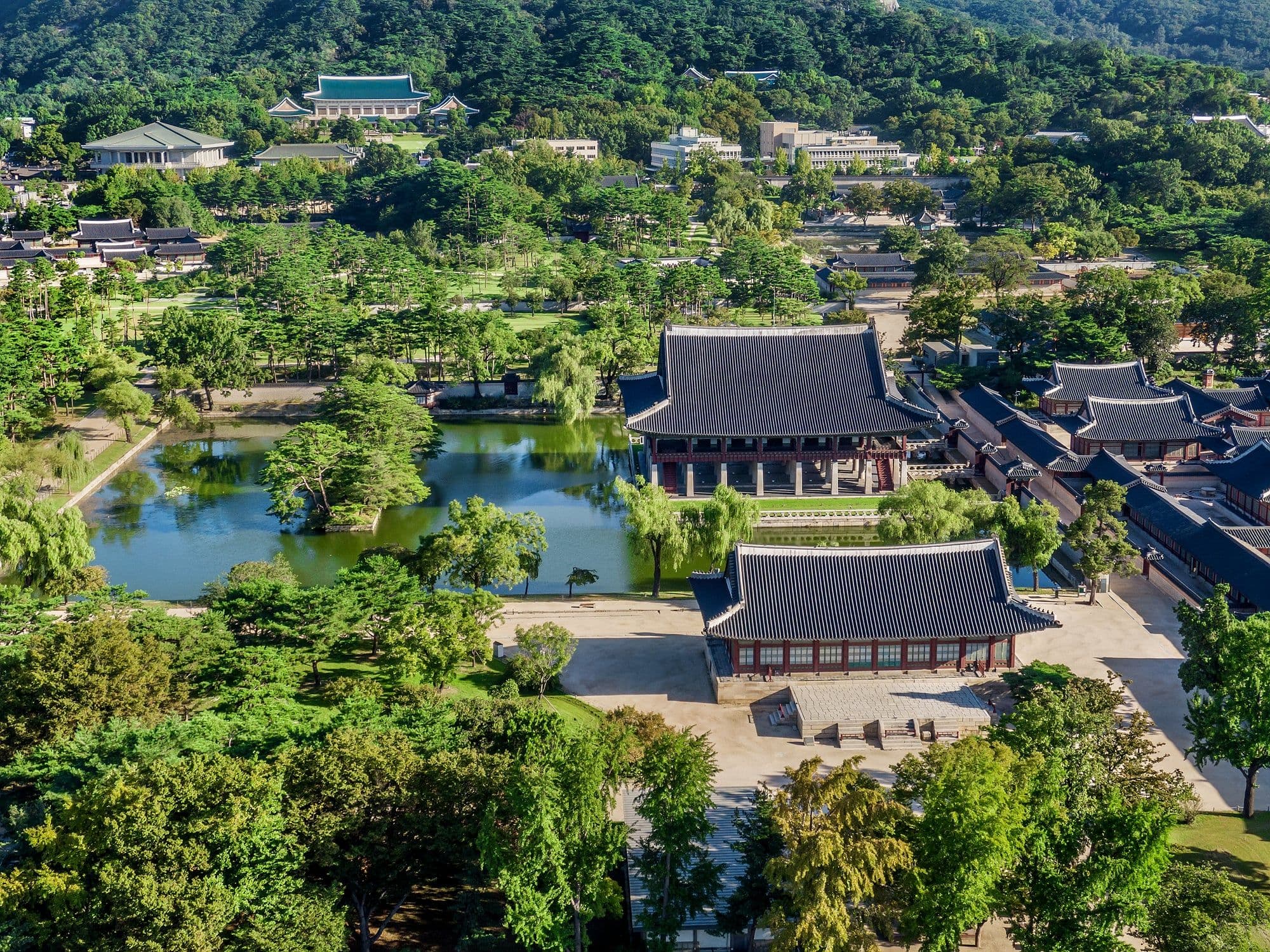

Region: Seoul | Theme: Royal heritage + slow neighborhood wander | Ideal Trip Length: 1-day
Seoul has a way of stitching centuries together in a single frame—painted palace eaves, stone alleys lined with hanok rooftops, and modern glass glinting in the distance like a quiet reminder: this is a living city. This 1-day route is designed for travelers who want classic highlights and a softer, more local rhythm—complete with walkable connections, transit notes, and timing tips you can use immediately.
Quick Plan at a Glance
| What | Recommendation |
|---|---|
| Best time to go | Weekday + morning start (9–10 AM) to dodge peak crowds and harsh midday light |
| How to get around | Mostly walking in Jongno + one subway/taxi hop to the National Museum |
| Who this itinerary is for | First-timers, culture lovers, photographers, “I want history but not rushed” travelers |
| Time needed | 8–10 hours (with breaks) |
1) Gyeongbokgung Palace — 경복궁
It’s the #1 “first Seoul memory” for many visitors: a grand palace complex where painted dancheong colors, wide courtyards, and mountain-backed rooftops feel like a period film set. It’s popular because it’s iconic, central, photogenic, and easy to reach by subway—the kind of place that instantly says you’re in Korea.

- Best time to visit: Right at opening for calm courtyards and softer light; late afternoon can also be beautiful, but busier.
- How long to stay: 1.5–2.5 hours (more if you like slow architecture details).
- How to get there: Subway to Gyeongbokgung Station (Line 3) or Gwanghwamun Station (Line 5), then walk.
- Cost: Typical admission fee / may vary; discounts may exist (e.g., certain attire or combined tickets—policies can change).
- Photo note: The main gate + symmetrical courtyard shots work best before tour groups arrive.
- Local etiquette / notes: Dress respectfully; keep voices low in ceremonial areas; avoid stepping over thresholds in traditional buildings.
📍 Address (English): 161 Sajik-ro, Jongno-gu, Seoul
🕐 Hours: Typical daytime hours; closed one weekday / may vary (check the official listing before you go)
2) Bukchon Hanok Village — 북촌 한옥마을
Bukchon is loved for its storybook hanok rooftops layered across a hillside—an old neighborhood that still breathes between cafes, family homes, and quiet lanes. It’s popular because it offers the most “traditional Seoul” photos within a short walk from the palace area.

- Best time to visit: 10–11 AM (after palace opening rush) or golden hour for warm rooftops.
- How long to stay: 60–90 minutes if you keep moving; 2 hours if you browse shops and viewpoints.
- How to get there: Walk from Gyeongbokgung (about 15–25 minutes, depending on your route) or subway to Anguk Station (Line 3).
- Cost: Free to wander; some paid experiences (craft, tea, galleries) vary by venue.
- Photo spot: Look for uphill viewpoints where rooftops “stack” toward the skyline; shoot slightly lower to emphasize tiles and depth.
- Local etiquette / notes: This is a residential area—keep noise down, avoid blocking doorways, and be mindful of quiet-hour signs.
📍 Address (English): Bukchon area (near 37 Gyedong-gil, Jongno-gu, Seoul)
🕐 Hours: Open streets; individual venues vary
3) National Museum of Korea — 국립중앙박물관
This is one of the most rewarding culture stops in Seoul—vast, well-curated, and often surprisingly calm. It’s popular because it’s world-class, frequently free (for permanent exhibitions), and ideal for understanding Korean history fast—from ancient crowns to minimalist celadon.

- Best time to visit: Mid-to-late afternoon when you want a cooler, slower pace (or rainy-day backup).
- How long to stay: 1.5–3 hours (pick 1–2 galleries if you’re short on time).
- How to get there (from Bukchon/Jongno):
- Subway: Typical 25–40 minutes with transfers (aim for Ichon Station or nearby stops depending on your route).
- Taxi: Typically 20–30 minutes (traffic can change everything).
- Cost: Permanent exhibitions are often free / may vary; special exhibitions may require tickets.
- Photo note: Outdoor areas and reflecting pools can be great; inside, photo rules vary by gallery.
- Local etiquette / notes: Keep voices low; follow “no flash” signs; lockers are usually available (policy may vary).
📍 Address (English): 137 Seobinggo-ro, Yongsan-gu, Seoul
🕐 Hours: Typical daytime-to-evening museum hours; one closed day / may vary
4) Osulloc Tea House (Bukchon Branch) — 오설록 티하우스 북촌점
This stop is beloved because it turns a busy sightseeing day into something softer: green tea aroma, calm interiors, and beautifully plated desserts that feel like a pause button. It’s popular thanks to its recognizable brand, easy “treat stop” location near Bukchon, and photogenic menu.

- Best time to visit: Before 2 PM to avoid peak café lines; late afternoon for a quieter reset.
- How long to stay: 40–70 minutes (perfect “buffer time” in your schedule).
- How to get there: Walkable from Bukchon viewpoints and Anguk area (10–15 minutes, depending on where you are).
- Cost: Drinks/desserts are mid-range café pricing / may vary.
- Order idea: If you’re new to Korean green tea culture, start with a signature green tea and one dessert to share.
- Local etiquette / notes: Seating can be limited—plan for a short wait and keep bags tidy in compact spaces.
📍 Address (English): Bukchon/Anguk area, Jongno-gu, Seoul (search 오설록 티하우스 북촌점 in maps for the latest pin)
🕐 Hours: Typical café hours; may vary by season
5) Bukchon Cultural Center — 북촌문화센터
A quieter gem: the Cultural Center is a gentle doorway into local craft, neighborhood history, and small exhibitions. It’s popular because it’s free/low-cost, close to Bukchon’s main lanes, and offers cultural context beyond just “pretty photos.”

- Best time to visit: Late morning or early afternoon—when you want a short, meaningful stop between walks.
- How long to stay: 20–45 minutes (longer if there’s a program).
- How to get there: On foot within Bukchon (often 5–10 minutes from key lanes).
- Cost: Many exhibitions are free / may vary; hands-on programs may have fees or reservations.
- What to do: Check for mini exhibitions, cultural info, or activity sign-ups (availability varies).
- Local etiquette / notes: Some areas are quiet zones; follow staff guidance if a class is in session.
📍 Address (English): Bukchon area (Gyedong-gil vicinity), Jongno-gu, Seoul
🕐 Hours: Typical daytime hours; may vary
Suggested Itinerary
Half-day Plan (4–5 hours): Royal Core + Hanok Walk + Tea
9:00–11:00 | Gyeongbokgung Palace (경복궁) — 1.5–2 hours
Start early for the cleanest photos and calmer courtyards. This is when the light is softest and the space feels most yours.
11:00–11:30 | Walk to Bukchon Hanok Village (북촌 한옥마을) — 20–30 minutes with photo pauses
The transition from palace avenues to narrow hanok lanes is part of the charm. Don't rush this walk.
11:30–12:00 | Bukchon Cultural Center (북촌문화센터) — 20–30 minutes
Quick context stop: exhibitions or cultural notes that make the neighborhood feel lived-in.
12:00–13:00 | Osulloc Tea House Bukchon (오설록 티하우스 북촌점) — 45–60 minutes
End with tea so you're not watching the clock while strolling. This is your reward for the morning's pacing.
Why This Order Works: Morning palace light → mid-morning hanok lanes → tea break before crowds swell. You're always slightly ahead of the rush, making everything more enjoyable.
1-day Plan (8–10 hours): Royal Seoul + Museum Finish
The Complete Experience
9:00–11:30 | Gyeongbokgung Palace (경복궁)
Give yourself the full experience here. Walk slowly, find the quiet corners, understand the space.
11:30–13:30 | Bukchon Hanok Village (북촌 한옥마을) + light lunch nearby
Explore the lanes, find your favorite viewpoints, grab lunch at a local spot.
13:30–14:15 | Bukchon Cultural Center (북촌문화센터)
Add the context that makes everything else click.
14:30–15:30 | Osulloc Tea House Bukchon (오설록 티하우스 북촌점)
Your afternoon reset — the pause between exploration and museum time.
16:30–19:00 | National Museum of Korea (국립중앙박물관)
Go later when your feet want indoor space and your mind wants stories. The museum becomes a perfect ending — thoughtful, calm, offering perspective on everything you've seen.
💡 Transit Tip: From Bukchon/Anguk area to the museum, subway is steady; taxi is simpler if you're tired — both are realistic depending on traffic and energy levels.
📋 Everything You Need to Know Before You Go
🚇 Getting Around
Transit Card is Essential
Pick up a T-money card at convenience stores or subway stations for easy taps on subway and buses. It saves time and makes navigation seamless.
Map Apps Matter
For walking routes and accurate pins, travelers often find Naver Map or KakaoMap more reliable in Korea; keep Google Maps as a backup. The difference in accuracy, especially for smaller streets in Bukchon, is real.
Transit Between Sites
- Palace to Bukchon: 15–25 minute walk (recommended) or Anguk Station (Line 3)
- Bukchon to Museum: 25–40 minutes by subway with transfers, or 20–30 minutes by taxiPractical Tips for a Smooth Day
⏰ Timing Strategy
Crowd Intelligence
Palaces and Bukchon get busiest late morning to mid-afternoon — starting early changes the whole mood. You'll have better photos, more peaceful experiences, and more energy for the afternoon.
Peak vs. Off-Peak
- Best days: Weekday mornings (Tuesday–Thursday)
- Busiest times: 11 AM–3 PM on weekends
- Sweet spot: 9 AM openings and late afternoon museum visits
👟 Practical Comfort Tips
Footwear Matters
Bukchon has slopes and stone paths; palace courtyards are vast. Choose shoes that won't punish you after hour three. This isn't a suggestion — it's the difference between enjoying your day and counting the minutes until you can sit down.
Weather Readiness
- Summer: Sun reflects off stone; bring sun protection and stay hydrated
- Winter: Wind cuts through open courtyards; layer up
- Rain: Museum-first strategy; palace courtyards can still be atmospheric (just slippery)
Energy Management
You're looking at 15,000–20,000 steps for the full-day route. Build in rest points (tea house, museum benches) and don't skip meals.
🎭 Cultural Courtesy
In Bukchon
Treat the lanes like a quiet neighborhood rather than an open-air studio — because that's exactly what they are. Keep voices down, don't block doorways, respect quiet-hour signs. Your photos will actually feel better for it.
At Religious/Historical Sites
Dress respectfully, keep voices low in ceremonial areas, follow photo rules, and never step over thresholds in traditional buildings (it's considered both disrespectful and bad luck).
FAQ
1) Is this doable without Korean?
Yes — major sites and transit have English support, and map searches work well if you copy-paste exact names like 경복궁 or 북촌 한옥마을. The city is remarkably navigable for non-Korean speakers, especially in these tourist-friendly areas.
2) Do I need reservations?
Usually not for general entry, but special exhibitions, workshops, or seasonal programs may require booking. If a place is central and popular (Bukchon cafés especially), waits can happen — but they're rarely long enough to derail your day.
3) What if it rains?
Swap the pacing: do National Museum of Korea earlier (indoor-heavy), then do Bukchon/tea when the rain eases. Palace courtyards can still be atmospheric in light rain — just slippery, so watch your footing.
4) What's the best season?
Each has its charm:
- Spring (April–May): Cherry blossoms, perfect temperatures
- Autumn (October–November): Fall colors, crisp air, ideal light
- Summer (June–August): Lush and green, but hot and humid
- Winter (December–February): Fewer crowds, dramatic light, cold but clear
📌 Quick Reference Card
| Item | Details | |
|---|---|---|
| Topic | rotal seoul | 1day tour |
| Region | Seoul | |
| Best Season/Time | Spring/Fall or any clear weekday; start morning for fewer crowds | |
| Total Time Needed | 8–10 hours (1-day) / 4–5 hours (half-day) | |
| Spots | Gyeongbokgung Palace, National Museum of Korea, Bukchon Hanok Village, Bukchon Cultural Center, Osulloc Tea House (Bukchon) | |
| Getting Around | Walk in Jongno + subway/taxi to the museum; use T-money for seamless transit |