

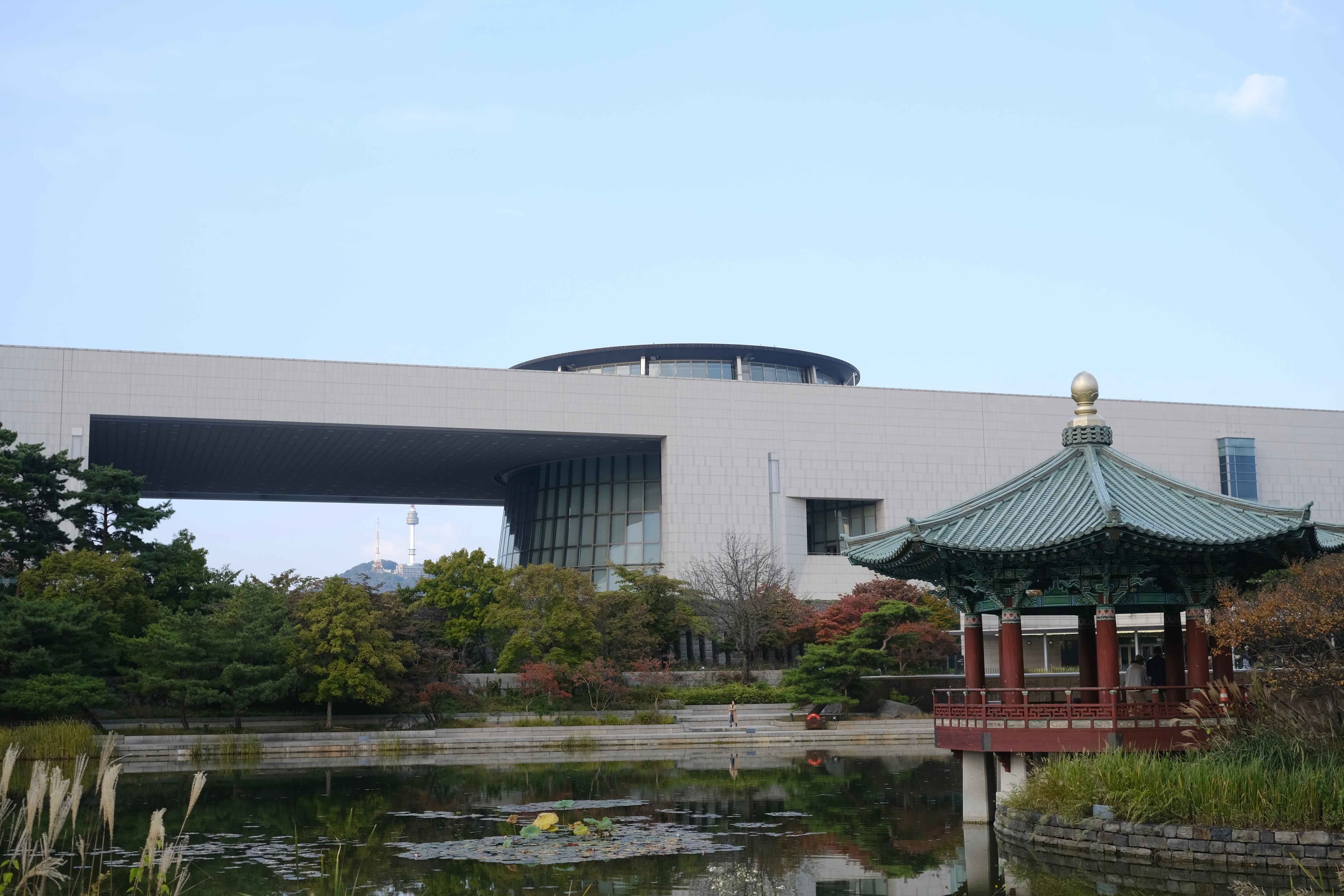

Location: Yongsan-gu, Seoul | Category: History & Art Museum | Best For: First-time visitors, History enthusiasts, Families
Over 310,000 artifacts spanning 700,000 years of human history—and it costs nothing to explore. The National Museum of Korea in Yongsan draws more than 6.5 million visitors annually, placing it among the world's most-visited museums alongside the Louvre and Vatican Museums (The Korea Times, January 2026). Here's what to know before your visit.

At a Glance
| Address | 137 Seobinggo-ro, Yongsan-gu, Seoul (서울 용산구 서빙고로 137) |
| Hours | Mon, Tue, Thu, Fri, Sun: 10:00 AM – 6:00 PM / Wed, Sat: 10:00 AM – 9:00 PM |
| Admission | Free (permanent exhibitions) |
| Time Needed | 2–4 hours (minimum), full day (comprehensive) |
| Best Time | Weekday mornings; Wednesday or Saturday evenings for extended hours |
Why This Museum Matters
Established in 1945 following Korea's independence from Japan, the National Museum of Korea relocated to its current 295,551 m² Yongsan campus in 2005. The building ranks as the sixth-largest museum in the world by floor space.
The permanent collection rotates approximately 15,000 pieces at any given time, drawn from holdings of over 310,000 artifacts. Six core galleries trace Korean civilization from Paleolithic hand axes to Joseon-era white porcelain. The collection's scope distinguishes it from palace sites or folk museums elsewhere in Seoul—this is comprehensive history told through objects.
The 2025 visitor surge reflects growing global interest in Korean heritage. Sales of MU:DS (the museum's merchandise brand) exceeded ₩40 billion ($27.8 million) in 2025, with items like the "Kkachi-Tiger" enamel pin selling out within 20 minutes of release (The Korea Herald, December 2025).
What to See Inside
Ground Floor: Ancient Korea
The Prehistory and Ancient History Gallery holds roughly 4,500 artifacts from the Paleolithic through the Unified Silla era. Nine rooms cover distinct periods: Palaeolithic, Neolithic, Bronze Age, Gojoseon, Proto-Three Kingdoms, Goguryeo, Baekje, Gaya, and Silla. The Silla golden crown and Baekje incense burner replicas rank among the most photographed items. Allow 60–90 minutes for this floor alone.

First Floor: Medieval to Modern
The Medieval and Early Modern History Gallery follows Korea through the Goryeo Dynasty (918–1392), Joseon Dynasty (1392–1897), and Korean Empire (1897–1910). Highlights include Buddhist paintings, lacquerware with mother-of-pearl inlay, and the recently renovated Oegyujanggak Uigwe Room displaying returned royal documents.

Second and Third Floors: Art and Global Collections
The Calligraphy and Painting Gallery occupies the second floor, with works by Joseon-era court painters and scholar-artists. The Room of Quiet Contemplation—intentionally sparse with just two Buddhist sculptures—invites extended viewing.
The third floor houses donated collections and an Asian Art Gallery with pieces from Central Asia, Japan, China, and Southeast Asia. A 14th-century Sinan shipwreck display reveals trade goods recovered from a vessel that sank off Korea's coast.
The Ten-Story Stone Pagoda
Rising in the museum's central atrium, the 13.5-meter Ten-story Stone Pagoda from Gyeongcheonsa Temple (National Treasure No. 86) commands attention. Built during the Goryeo period, the marble pagoda spent decades in Japan before its 1918 return. Its position in the entrance hall makes it the first major artifact most visitors encounter.

Beyond the Galleries: Outdoor Spaces
Pagoda Garden
Stone pagodas, Buddhist stupas, lanterns, and the Great Bell of Bosingak (Treasure No. 2) populate the outdoor exhibition area. The garden opens at 7:00 AM and closes at 10:00 PM—separate from main museum hours.
Traditional Dye Plant Garden
Behind the museum, the Botanical Garden for Traditional Dyes (전통염료식물원) cultivates plants historically used to create natural pigments. Indigo, safflower, gardenia, and other specimens grow alongside traditional architecture elements. The spring plum blossom season draws photographers seeking alternatives to crowded cherry blossom spots.


Mirror Pond
The 120-meter-diameter reflecting pool in front of the museum creates one of Seoul's best vantage points for photographing N Seoul Tower. Cheongjajeong Pavilion, built in 2009 for the museum's centennial, extends over the water.
Getting There
Subway: Take Line 4 or the Gyeongui-Jungang Line to Ichon Station. Exit 2 connects directly to the museum via an underground passage called the "Moving Museum"—a 150-meter covered walkway with display cases. Total walk time: 5 minutes.
Bus: Routes 400 and 502 stop at "National Museum of Korea, Yongsan Family Park."
Taxi: Show the driver "국립중앙박물관" (Gungnip Jungang Bangmulgwan) or the address: 서울 용산구 서빙고로 137.
Parking: Underground parking available. Rates apply.
Practical Planning Tips
- Free guided tours run in English, Chinese, and Japanese at 10:30 AM and 1:00 PM on weekdays. Meet at the Korean Empire Gallery on the first floor. No reservation required.
- Download the museum app before visiting. The IoT-based guide covers major exhibits in five languages (Korean, English, Chinese, Japanese, Vietnamese) with AR navigation and location-based automatic commentary.
- Children's Museum requires online reservation. Free admission, but timed entry slots fill quickly on weekends. Target age: elementary school.
- VR experiences in Immersive Digital Gallery 2 require separate online booking, available 30 days in advance.
- Special exhibitions charge separate fees. The current "From Impressionism to Early Modernism: Collectors of Light" (through March 15, 2026) costs ₩5,000 for adults, ₩3,000 for ages 7–24.
- Lockers and strollers are available free in the Great Hall. Strollers accommodate children up to 15 kg. Lactation room located on the first floor opposite the museum shop.
- Photography is permitted in permanent galleries without flash, tripods, or selfie sticks. Commercial photography requires written permission.

The Gift Shop Phenomenon
Three museum shops plus a third-floor MU:DS Brand Showroom sell heritage-inspired merchandise. The miniature Pensive Bodhisattva statue launched the collectibles trend in 2020; recent hits include the Kkachi-Tiger pin and gat-shaped pen. Prices range from ₩5,000 for postcards to ₩50,000+ for replica artifacts. The online store (muds.kr) ships internationally.
📌 Quick Reference
- Official site: museum.go.kr/site/eng/home
- Instagram: @nationalmuseums_korea
- Facebook: NationalMuseumofKorea.eng
- Info hotline: ☎ +82-2-2077-9000 (Korean, English)
- Children's Museum reservations: museum.go.kr
- MU:DS online shop: muds.kr
- Location: 137 Seobinggo-ro, Yongsan-gu, Seoul (서울 용산구 서빙고로 137)