

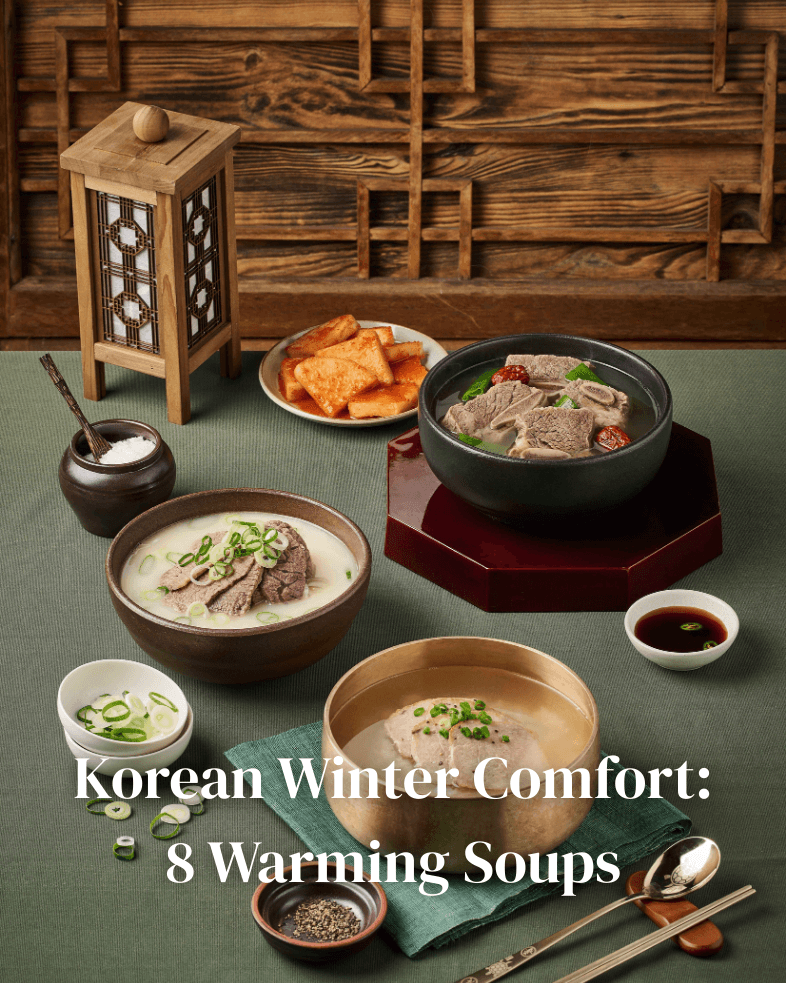

Type: Soup & Stew | Price Range: ₩8,000-60,000 (~$6-45) | Best For: Cold weather dining, comfort food seekers, solo travelers
Steam rising from a stone pot. A rich broth that warms from the inside out. Korean soup culture runs deep—these dishes carry centuries of tradition and still fuel daily life across Seoul. From milky bone broths to fiery seafood stews, each bowl tells a different story.
This guide covers eight essential Korean soups and stews, with practical details on where to find them, what to pay, and how to order like you've done this before.
At a Glance
| Food Type | Soups & Stews (국 & 찌개) |
| Price Range | ₩8,000-60,000 (~$6-45) |
| Spice Level | Varies: mild to very spicy |
| Best Areas | Myeongdong, Jongno, Euljiro, Sinchon |
| Best Time | Lunch or dinner; perfect for cold/rainy days |
Why Korean Soups Matter
Korean cuisine treats soup as a meal anchor, not a starter. The word guk (국) refers to lighter broths served with rice, while jjigae (찌개) indicates thicker, more intensely flavored stews. Tang (탕) falls somewhere between—heartier than guk, often featuring meat or seafood.
Most soups arrive bubbling in stone pots called ttukbaegi or dolsot, keeping the contents hot throughout the meal. Seasoning happens tableside: you'll find salt, pepper, chopped scallions, and sometimes gochugaru (chili flakes) to adjust the flavor yourself.
The Essential Eight
1. Samgyetang (삼계탕) — Ginseng Chicken Soup
Price: ₩15,000-20,000 (~$11-15) | Spice Level: None | Best Season: Year-round (traditionally summer)
A whole young chicken stuffed with glutinous rice, ginseng, jujube, and garlic, then simmered until the meat falls off the bone. The broth comes out pale and nourishing.

Many restaurants serve a small shot of ginseng liquor on the side—pour it into the soup or drink it straight.
2. Sundubu-jjigae (순두부찌개) — Soft Tofu Stew
Price: ₩8,000-12,000 (~$6-9) | Spice Level: Medium to hot
Silky uncurdled tofu swimming in a brick-red broth packed with seafood, pork, or vegetables. The stew arrives at a rolling boil; crack a raw egg into it and watch it cook in seconds. Rice comes separately—spoon the stew over it or alternate bites.

The seafood version (haemul sundubu) packs shrimp, clams, and squid into the pot. Most restaurants let you choose your protein and spice level.
Local tip: Bukchandong Soondubu in Myeongdong serves generous portions with unlimited side dishes for around ₩9,000.
3. Kimchi-jjigae (김치찌개) — Kimchi Stew
Price: ₩7,000-10,000 (~$5-7) | Spice Level: Medium to hot
Aged kimchi simmered with pork belly, tofu, and scallions creates this tangy, funky, deeply satisfying stew. The older the kimchi, the better—restaurants often age theirs for months to develop complex sour notes.

This is the Korean equivalent of a pantry meal, found everywhere from street-side diners to office building cafeterias. Gwanghwamun House in Jongno has held steady for 30 years with a loyal following.
4. Galbitang (갈비탕) — Beef Short Rib Soup
Price: ₩12,000-18,000 (~$9-13) | Spice Level: None
Bone-in beef short ribs simmered for hours produce a clear, golden broth with serious depth. The meat comes tender enough to pull apart with chopsticks. Glass noodles (dangmyeon) and radish rounds often float alongside.

Unlike most Korean soups, galbitang tastes fully seasoned from the kitchen. Salt and pepper sit on the table for minor adjustments only.
5. Seolleongtang (설렁탕) — Ox Bone Soup
Price: ₩10,000-15,000 (~$7-11) | Spice Level: None
Ox bones simmer for 12-24 hours until the broth turns milky white from extracted collagen. Thin slices of brisket and rice noodles complete the bowl. The catch: it arrives deliberately unseasoned.

Your job is to build the flavor. Add coarse salt first, then black pepper and chopped scallions. Some diners stir in kimchi juice for extra punch.
Sinseon Seolleongtang near Myeongdong Station has served this dish since 1981. Prices run ₩10,000-38,000 depending on bowl size and add-ons.
6. Kalguksu (칼국수) — Knife-Cut Noodle Soup
Price: ₩8,000-12,000 (~$6-9) | Spice Level: None to mild
Hand-cut wheat noodles with a satisfying chew swim in a clear anchovy or clam broth. Bajirak kalguksu (clam version) dominates Seoul menus—briny, clean, and deeply comforting.

The name translates to "knife noodles" because the dough is rolled flat and sliced by hand rather than extruded. Fresh kimchi called geotjeori typically accompanies each bowl.
7. Budae-jjigae (부대찌개) — Army Stew
Price: ₩8,000-12,000 per person (~$6-9) | Spice Level: Medium
Spam, hot dogs, baked beans, instant ramen, and kimchi merge in a spicy broth topped with melted cheese. Born from post-war scarcity near U.S. military bases, this stew transformed surplus rations into comfort food.

Uijeongbu, just north of Seoul, claims birthplace status. Two dozen restaurants line Budae-jjigae Street there, each with loyal regulars debating whose recipe tastes best. Odeng Sikdang opened in 1960 and still draws crowds.
8. Haemultang (해물탕) — Spicy Seafood Stew
Price: ₩40,000-60,000 for 2-3 people (~$30-45) | Spice Level: Medium to hot
A showstopper pot crammed with crab, prawns, octopus, mussels, clams, and whatever else the kitchen sources fresh that day. The fiery red broth packs heat from gochugaru and gochujang.

This is sharing food—order for two or more. Most restaurants add instant noodles to soak up the remaining broth after you've picked through the seafood.
The cost reflects the quantity and quality of ingredients. Budget restaurants start around ₩40,000 for two; premium spots with live-caught seafood can exceed ₩100,000.
How to Order
Korean soup restaurants follow predictable patterns. Here's the drill:
Step 1: Find your seat. Most places don't have hosts. Walk in, find an open table, sit down.
Step 2: Check the menu. Single-item specialists post their menu on the wall. General restaurants hand you a laminated sheet. Photos help with unfamiliar names.
Step 3: Call for service. Say "Jeogi-yo" (저기요) or press the table buzzer if one exists.
Step 4: Order by pointing. Menu photos and Google Translate work when language fails.
Step 5: Season to taste. Use the condiments on the table—salt, pepper, scallions, chili flakes—to adjust your bowl.
Common menu terms:
- 기본 (gibon) — regular/basic
- 대 (dae) — large
- 소 (so) — small
- 곱배기 (gopbaegi) — double portion
- 공기밥 (gonggi-bap) — bowl of rice
Practical Tips
Timing matters. Lunch crowds peak between 12:00-1:30 PM. Popular spots develop lines by noon on weekdays. Arrive at 11:30 AM or after 2:00 PM to avoid waits.
Rice comes separately. Most soups arrive with a small metal bowl of rice on the side. Drop spoonfuls into your soup or eat it plain between slurps.
Refills are often free. Banchan (side dishes), rice, and sometimes broth get refilled at no charge. Just ask: "Deo juseyo" (더 주세요).
Stone pots stay scorching. The ttukbaegi holds heat for 15-20 minutes. Pace yourself—burning your tongue in the first minute ruins the meal.
Slurping is acceptable. Noise signals enjoyment in Korean dining culture. Don't hold back.
Credit cards work almost everywhere. Cash backup helps at older family-run spots, but Seoul runs on cards and mobile payment.
📌 Quick Reference
- Best areas: Myeongdong, Jongno, Euljiro, Sinchon, Uijeongbu (for budae-jjigae)
- Average price: ₩8,000-15,000 for individual portions; ₩40,000+ for shared seafood pots
- Reservation: Usually not needed; walk-ins standard
- Dietary info: Vegetarian options rare; sundubu-jjigae sometimes available without meat