


Type: Noodles / Comfort Food | Price Range: ₩6,000-15,000 (~$4-11) | Best For: Solo diners, Comfort seekers, All-weather eating
Slurping is encouraged. Korean noodle culture runs deep—from black bean sauce pooling around wheat noodles to ice-cold broth with buckwheat strands floating on top. Seoul alone has thousands of noodle shops, each specializing in one or two dishes perfected over decades. Some warm you up in winter. Others cool you down when summer humidity peaks above 80%.
This guide covers seven essential Korean noodles, where to find the best bowls, and the seasonal logic behind each dish.
The Seven Essential Korean Noodles
Korean noodles split into two camps: hot and cold. The hot ones—ramyeon, kalguksu, janchi-guksu—dominate fall through spring. Cold noodles like naengmyeon and kongguksu appear on menus when temperatures climb past 25°C. Knowing this seasonal rhythm helps you eat like locals do.
Each noodle type uses different flour bases. Wheat, buckwheat, sweet potato starch, and hand-torn dough all create distinct textures. The broth matters just as much—some simmer for 12+ hours, others come together in minutes.
Hot Noodles: Cold-Weather Comfort
Jjajangmyeon (짜장면) — Black Bean Noodles

Thick wheat noodles under a mountain of black bean sauce mixed with diced pork and onions. Chinese-Korean fusion born in Incheon's Chinatown during the 1950s. The sauce should coat each strand without pooling at the bottom.
Price: ₩7,000-9,000 (~$5-7) | Spice Level: None
Gonghwachun (공화춘)
Location: 56-14 Chinatown-ro, Jung-gu, Incheon | Price: ₩8,000 | Hours: 10:30 AM - 9:00 PM
The restaurant credited with creating jjajangmyeon in 1905. Now a museum and working restaurant combined. The original recipe uses chunjang (spring sauce) imported from Shandong province. Weekend waits stretch to 40+ minutes—book via Naver or arrive before 11 AM.
Local tip: Mix everything thoroughly before eating. Leaving sauce at the bottom means you've done it wrong.
Ramyeon (라면) — Korean Instant Noodles Elevated

Not the packet you make at home. Restaurant ramyeon comes with fresh vegetables, egg, and sometimes cheese or dumplings. The broth packs more heat than Japanese ramen—gochugaru (red pepper flakes) burns slow and steady.
Price: ₩5,000-8,000 (~$4-6) | Spice Level: Medium to Very Spicy
Samcheongdong Sujebi (삼청동수제비)
Location: 101-1 Samcheong-ro, Jongno-gu | Price: ₩10,000 for ramyeon set | Hours: 11:00 AM - 9:00 PM
Famous for sujebi but their ramyeon holds its own. Handmade noodles in anchovy-kelp broth with generous vegetable portions. The Samcheong-dong location fills fast during lunch—the narrow alley means no waiting space outside.
Kalguksu (칼국수) — Knife-Cut Noodles

Kal means knife. Each noodle is hand-cut from rolled dough, creating uneven edges that grip the milky broth. Anchovy and clam bases dominate Seoul. The texture lands somewhere between udon and fresh pasta—chewy with a slight bite.
Price: ₩9,000-12,000 (~$7-9) | Spice Level: None (add kimchi for kick)
Myeongdong Kyoja (명동교자)
Location: 29 Myeongdong 10-gil, Jung-gu | Price: ₩11,000 | Hours: 10:30 AM - 9:30 PM
Three items on the menu. Kalguksu, mandu (dumplings), and bibim-guksu. That's it. The simplicity speaks to confidence. Their chicken-based broth differs from typical anchovy versions—lighter, cleaner, with handmade noodles cut fresh each morning. Michelin Bib Gourmand recognition since 2017.
Getting there: Myeongdong Station (Line 4), Exit 8. Walk 5 minutes toward the main shopping street.
Janchi-guksu (잔치국수) — Banquet Noodles

Thin wheat noodles in clear anchovy broth. Traditionally served at weddings and celebrations—hence "banquet noodles." The dish costs little and fills much. Toppings stay minimal: sliced zucchini, egg strips, sometimes kimchi on the side.
Price: ₩6,000-8,000 (~$4-6) | Spice Level: Mild
Perfect for: Light meals, upset stomachs, budget eating
Sujebi (수제비) — Hand-Torn Noodle Soup

Dough torn by hand into irregular flat pieces, simmered in potato-anchovy broth with zucchini and potatoes. Comfort food in its purest form. Each piece has unique thickness—some thin and silky, others thick and chewy.
Price: ₩8,000-10,000 (~$6-8) | Spice Level: None
Jin Ok Hwagye Sujebi (진옥화계수제비)
Location: 64 Donhwamun-ro 11na-gil, Jongno-gu | Price: ₩9,000 | Hours: 11:00 AM - 8:30 PM (Break: 3-5 PM)
Operating since 1982 near Changdeokgung Palace. The dough gets torn moments before serving—you can watch through the open kitchen. Lunch lines form by 11:30; the break time catches tourists off guard.
Cold Noodles: Summer Survival
Naengmyeon (냉면) — Ice-Cold Buckwheat Noodles

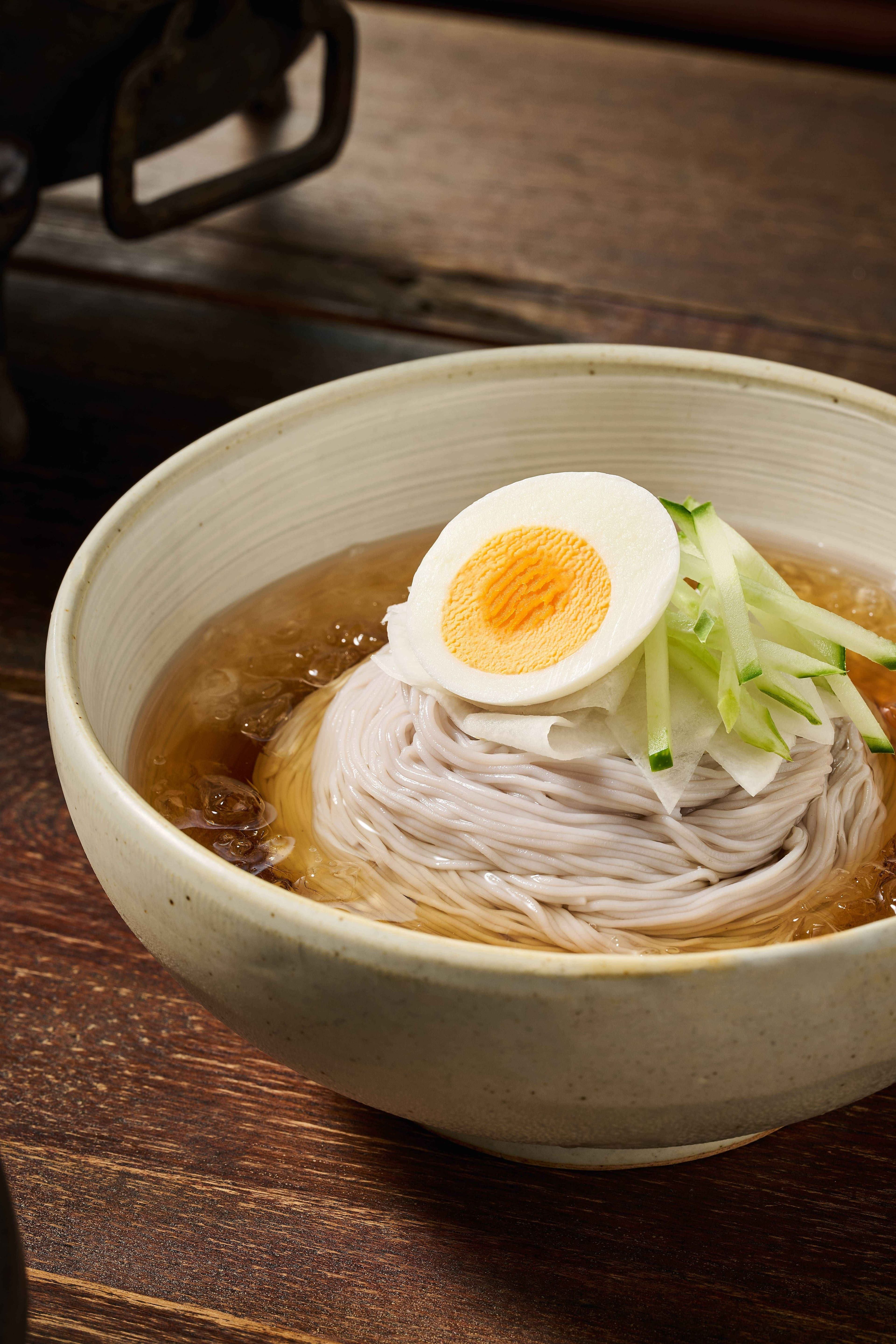
Two styles exist. Mul-naengmyeon floats thin buckwheat noodles in icy beef broth with sliced radish and cucumber. Bibim-naengmyeon skips the broth—noodles get tossed in gochujang-based sauce instead. Both arrive with ice chips floating on top or frozen into the broth itself.
Price: ₩11,000-15,000 (~$8-11) | Spice Level: Mild (mul) / Spicy (bibim)
Woo Lae Oak (우래옥)
Location: 62-29 Changgyeonggung-ro, Jung-gu | Price: ₩14,000 | Hours: 11:30 AM - 9:30 PM
Running since 1946. Pyongyang-style mul-naengmyeon with broth so clear you can see the bottom of the brass bowl. The buckwheat noodles contain no wheat flour—pure buckwheat makes them more fragile, less chewy. Cut with scissors before eating.
Reservation: Required for dinner. Call ahead or book via Catch Table app.
Kongguksu (콩국수) — Soy Milk Noodles

Summer-only dish. Wheat noodles swimming in cold, unsweetened soy milk ground fresh that morning. The broth tastes nutty, creamy, and surprisingly filling. Most shops serve it June through August only.
Price: ₩10,000-13,000 (~$7-10) | Spice Level: None
Jaha Sonmandu (자하손만두)
Location: 6 Jahamun-ro 17-gil, Jongno-gu | Price: ₩12,000 | Hours: 11:30 AM - 8:30 PM (Summer season only for kongguksu)
The soy milk gets ground in-house. Each bowl requires soybeans soaked overnight. The consistency runs thicker than typical—almost like a light porridge with noodles. Near Gyeongbokgung Palace, making it convenient after morning sightseeing.
How to Order: Menu Decoder
| Korean | Romanization | Meaning |
|---|---|---|
| 면 (麵) | myeon | Noodles |
| 국수 | guksu | Noodles (native Korean word) |
| 물 | mul | Water (indicates broth-based) |
| 비빔 | bibim | Mixed (indicates sauce-based) |
| 곱빼기 | gopbaegi | Large portion (+₩1,000-2,000) |
| 사리 추가 | sari chuga | Extra noodles (+₩2,000) |
Ordering tips:
- Point at photos if menus lack English
- "Gopbaegi" adds 50% more noodles for minimal extra cost
- Most places bring kimchi, radish, and pickled onions automatically
Practical Tips
Timing matters. Arrive before noon for popular spots. Korean lunch culture runs 12-1 PM sharp—restaurants empty by 1:30 PM.
Scissors are normal. Cold noodles come long. Cutting them with the provided scissors isn't rude—it's expected.
Slurping helps. Air mixed with hot noodles cools them faster. The sound signals appreciation, not bad manners.
Check seasonal menus. Kongguksu and naengmyeon disappear from many menus in winter. Kalguksu availability stays year-round.
Lunch specials save money. Many noodle shops offer set meals (정식, jeongsik) combining noodles with dumplings or rice for ₩2,000-3,000 less than ordering separately.
Translation apps work. Papago and Google Translate handle Korean menus well. Take a photo and translate directly.
Worth the Trip?
Korean noodles deliver comfort without pretense. For ₩10,000 or less, a single bowl fills you up and warms you through. The real draw? Specialization. Each shop masters one thing. That focus shows in the broth clarity, noodle texture, and portion honesty.
Try if: You want quick, affordable, satisfying meals between sightseeing.
Skip if: You need English menus everywhere or prefer avoiding carbs entirely.
📌 Quick Reference
- Best areas: Jongno (traditional), Myeongdong (tourist-friendly), Mapo (local favorites)
- Average price: ₩8,000-12,000 per bowl
- Reservation: Rarely needed except dinner at famous spots
- Dietary info: Most broths use anchovy/beef; vegetarian options limited—ask "gogi eopsi" (고기 없이, without meat)
- Related dishes: Mandu (dumplings), tteokguk (rice cake soup), juk (porridge)