

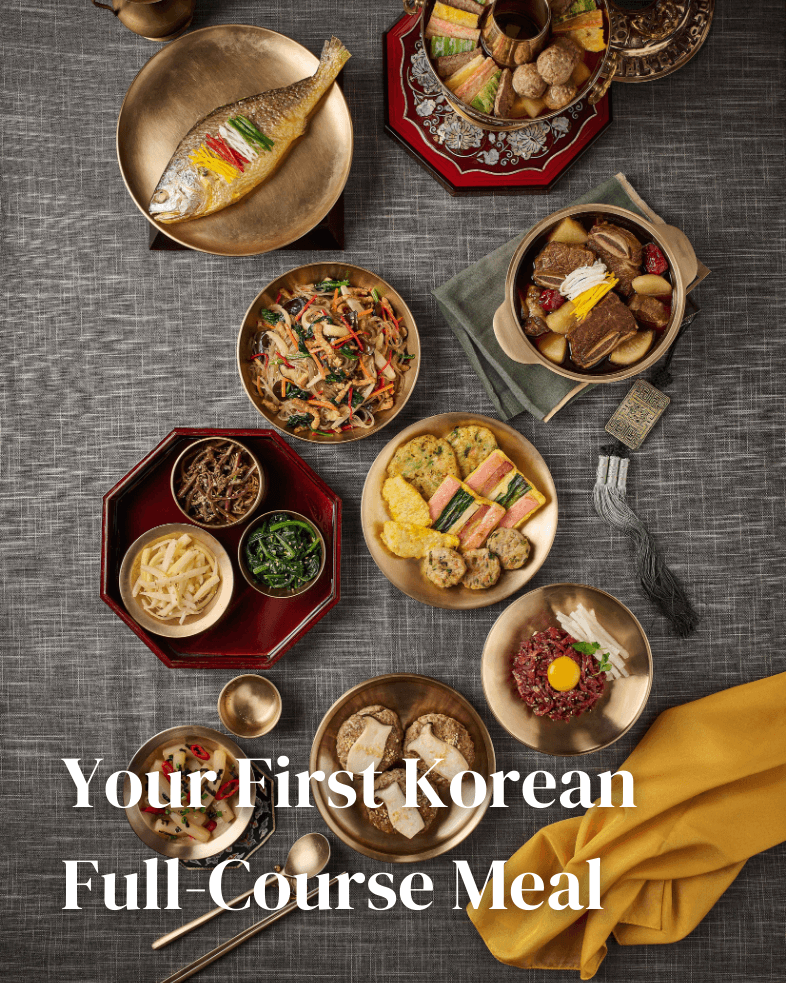

Type: Traditional Full-Course Meal | Price Range: ₩25,000-150,000 (~$18-110) | Best For: First-time visitors, Cultural immersion, Special occasions

A traditional hanjeongsik spread featuring over 20 dishes served simultaneously
Twenty dishes arrive at once. Rice, soup, grilled fish, raw beef, marinated crab, boiled pork, seasoned vegetables—all spread across a low wooden table in a traditional hanok room. This is hanjeongsik, Korea's answer to the full-course dining experience.
Unlike Western tasting menus served in sequence, hanjeongsik presents everything simultaneously. The visual impact alone justifies the price. This guide covers what to expect, where to book, and how to pace yourself through a meal that can easily last two hours.
At a Glance
| Food Type | Traditional Korean Full-Course |
| Price Range | ₩25,000-150,000 (~$18-110) |
| Dishes Served | 12-20+ items |
| Best Areas | Insadong, Bukchon, Jeonju, Gwanghwamun |
| Best Time | Lunch (better value), Dinner (full experience) |
| Reservation | Recommended for premium restaurants |
What Is Hanjeongsik?

A private hanok dining room—the traditional setting for hanjeongsik
Hanjeongsik (한정식) translates literally to "Korean set meal." The format originated from bangjja cuisine served to Joseon Dynasty royalty, where dozens of dishes arrived on brass tableware according to strict protocols. Court cuisine dictated specific numbers—3, 5, 7, 9, or 12 side dishes depending on the diner's rank.
Modern hanjeongsik evolved from these royal roots but adapted for restaurants in the mid-20th century. The Jeonju region became particularly famous for elaborate spreads, while Seoul developed its own refined variations.
The philosophy behind hanjeongsik centers on obangsaek—the five cardinal colors (white, black, red, yellow, blue/green) representing balance in Korean cosmology. A proper table displays this color harmony through ingredient selection. White rice, black sesame, red kimchi, yellow egg garnish, green vegetables. The meal aims for nutritional and visual equilibrium.
The Anatomy of a Hanjeongsik Table

A generous hanjeongsik spread showcasing the variety of dishes
Every hanjeongsik follows a basic structure, though restaurants vary in their specialties.
Bap (밥) — Steamed rice anchors the meal. Premium restaurants serve yeonipbap (rice steamed in lotus leaf) or multigrain varieties with chestnuts and jujubes.
Guk or Tang (국/탕) — A soup always accompanies the rice. Seaweed soup, bean sprout soup, or more elaborate meat-based broths.
Banchan (반찬) — The constellation of small dishes. Expect 8-15 varieties: seasoned spinach, fernbrake, bean sprouts, dried radish, fish cakes, pickled vegetables. These get replenished for free.
Main Dishes — This is where restaurants differentiate themselves. Common stars include:
- Bulgogi or galbi (marinated beef)
- Grilled fish (often yellow corvina)
- Jeon (savory pancakes)
- Jjim (braised dishes)
Signature Items — High-end establishments add showpieces: raw crab in soy sauce, beef tartare, royal hot pot.
Signature Dishes Worth Knowing
Yukhoe (육회)

Yukhoe: hand-cut raw beef topped with egg yolk and pine nuts
Price: Usually included in courses ₩50,000+ | Taste: Sweet, nutty, delicate
Hand-cut raw beef strips dressed in sesame oil and Asian pear, topped with a raw egg yolk. The Korean approach to beef tartare emphasizes sweetness over acidity. Mix thoroughly before eating—the yolk coats each strand with richness. Texture sits somewhere between silky and slightly chewy. Not for everyone, but adventurous eaters rank this among Korea's finest dishes.
Ganjang-gejang (간장게장)

Ganjang-gejang: raw crab marinated in soy sauce, known as the "rice thief"
Price: ₩15,000-25,000 as standalone; included in premium courses | Taste: Intensely savory, briny
Raw crab marinated in seasoned soy sauce for days until the flesh turns custardy. Koreans call it bap-doduk—"rice thief"—because the salty-sweet intensity demands extra rice. Scoop the orange roe from the shell, mix with warm rice, and understand why this dish commands cult status. The texture takes adjustment; the flavor rewards persistence.
Suyuk (수육)

Suyuk: tender boiled pork served with fresh kimchi and napa cabbage wraps
Price: ₩30,000-45,000 standalone; included in most courses | Taste: Clean, porky, tender
Pork belly boiled until tender, sliced thin, served with fermented shrimp sauce (saeujeot) and fresh kimchi for wrapping. The meat tastes cleaner than grilled pork—no char, no smoke, just pure pork flavor. Wrap a slice in napa cabbage with a dab of kimchi and radish. The combination of textures—soft meat, crunchy vegetables, tangy fermentation—defines Korean table harmony.
Sinseollo (신선로)

Sinseollo: the royal hot pot with its distinctive brass chimney vessel
Price: ₩40,000-80,000+ as centerpiece | Taste: Rich, complex, ceremonial
The royal hot pot. A brass vessel with a central chimney holds charcoal to keep the broth simmering tableside. Inside: meatballs, dumplings, seafood, vegetables, egg strips, pine nuts—arranged in meticulous patterns. Originally reserved for kings and high officials, sinseollo appears in upscale hanjeongsik as the dramatic centerpiece. The presentation alone takes 30+ minutes to assemble in the kitchen.
Namul (나물)

Assorted namul: the art of Korean seasoned vegetables
Price: Included with all courses | Taste: Earthy, sesame-forward, varied
The collective term for seasoned vegetable dishes. Spinach, bellflower root, fernbrake, bean sprouts, dried radish—each prepared differently but united by sesame oil, garlic, and salt. These humble sides often reveal a restaurant's true skill. Rushed namul tastes flat; properly prepared versions carry depth. And yes, all banchan including namul get unlimited refills.
Yeonipbap (연잎밥)

Yeonipbap: multigrain rice steamed in lotus leaf with chestnuts and beans
Price: Included in mid-range courses and above | Taste: Fragrant, nutty, wholesome
Multigrain rice steamed inside a lotus leaf, infused with its subtle, earthy fragrance. Unwrapping the leaf feels like opening a gift. The rice inside contains black rice, chestnuts, ginkgo nuts, and jujubes. Often served in temple-style or health-focused hanjeongsik courses. The lotus leaf imparts a delicate grassy note that elevates ordinary rice into something ceremonial.
Where to Eat: Three Price Tiers

A complete hanjeongsik table at a premium restaurant
Budget-Friendly: Gogung (고궁) — Insadong Branch
Location: 47 Insadong-gil, Jongno-gu, Seoul | Price: ₩18,000-30,000 | Hours: 11:30 AM - 9:30 PM daily
Gogung built its reputation on Jeonju-style bibimbap but runs a solid hanjeongsik program. The lunch course at ₩25,000 delivers 12+ dishes in a modern hanok setting. Expect 15-20 minute waits on weekends. No reservations for parties under 4—arrive before noon or after 2 PM.
📍 Getting there: Anguk Station (Line 3), Exit 6, 5-minute walk
Mid-Range: Korea House (한국의집)
Location: 10 Toegye-ro 36-gil, Jung-gu, Seoul | Price: ₩55,000-88,000 | Hours: 12:00 PM - 2:00 PM, 5:30 PM - 8:30 PM
Operated by the Korea Cultural Heritage Foundation, Korea House occupies a reconstructed traditional estate near Chungmuro. The setting feels formal—think cultural diplomacy dinners. Courses include traditional performance viewing (additional fee). The food emphasizes authenticity over innovation. Reservations required 2-3 days ahead via their website.
📍 Getting there: Chungmuro Station (Lines 3, 4), Exit 3, 8-minute walk 🔗 Reservations: koreahouse.or.kr
Premium: Jihwaja (지화자)
Location: 38 Bukchon-ro, Jongno-gu, Seoul | Price: ₩80,000-150,000 | Hours: 12:00 PM - 3:00 PM, 6:00 PM - 10:00 PM (Closed Mondays)
A restored hanok in Bukchon serving royal court-inspired courses. The ₩120,000 dinner includes sinseollo and seasonal specialties. Each course takes 2+ hours; rushing defeats the purpose. Book at least one week ahead for dinner, three days for lunch. English menus available. Private rooms for groups of 4+.
📍 Getting there: Anguk Station (Line 3), Exit 2, 10-minute uphill walk 🔗 Reservations: Call +82-2-2269-5834 or via Naver Booking
How to Order
Most hanjeongsik restaurants simplify ordering to course selection. You won't pick individual dishes—choose a price tier and the kitchen decides the rest.
Common menu structure:
- Course A (₩30,000-40,000): Standard selection, 10-12 dishes
- Course B (₩50,000-70,000): Premium items added, 15+ dishes
- Course C (₩80,000+): Full spread with specialties, 18-20+ dishes
Useful phrases:
- "Bap deo juseyo" (밥 더 주세요) — More rice, please
- "Igeo deo juseyo" (이거 더 주세요) — More of this, please (point at banchan)
- "Deul-gi-reum ppae juseyo" (들기름 빼 주세요) — Without perilla oil, please
For dietary restrictions: Call ahead. Most places can accommodate no-seafood or no-pork requests with advance notice. Full vegetarian hanjeongsik exists mainly at temple food restaurants like Balwoo Gongyang.
Dining Etiquette: The Essentials
Hanjeongsik carries more formality than casual Korean meals. A few norms to know:
Wait for elders. If dining with Koreans, the oldest person starts eating first. In tourist contexts, this matters less, but awareness shows respect.
Rice bowl stays on the table. Unlike Japanese custom, Koreans don't lift rice bowls. Use the spoon to scoop rice to your mouth.
Spoon for rice and soup, chopsticks for banchan. The metal chopsticks take practice—they're slippery by design. No shame in asking for wooden ones.
Don't stick chopsticks upright in rice. This resembles funeral incense rituals. Lay them across your bowl or on the chopstick rest.
Pace yourself. The meal looks overwhelming, but there's no rush. Take small portions from each dish, return for more favorites, let the flavors unfold gradually.
Price Reality Check
| Tier | Cost (KRW) | Cost (USD) | What You Get |
| Budget | ₩20,000-35,000 | $15-25 | 10-12 dishes, casual setting |
| Mid-range | ₩40,000-70,000 | $30-50 | 15+ dishes, hanok atmosphere |
| Premium | ₩80,000-150,000 | $60-110 | 18-20+ dishes, royal cuisine items |
Value tip: Lunch courses often cost 20-30% less than dinner for similar dishes. Weekday lunch at a mid-range spot delivers the full experience without the premium price or weekend crowds.
Quick Tips
Come hungry. The portion spread feeds generously. Skip breakfast if dining at lunch.
Wear comfortable clothes. Floor seating still dominates traditional restaurants. Tight jeans make two hours uncomfortable. Some places now have table seating—request when booking if needed.
Budget 90-120 minutes. Hanjeongsik isn't fast food. The meal unfolds slowly by design.
Save room for the main course. Banchan arrives first and looks endless. The grilled fish, meat dishes, and hot pot come later. Pace accordingly.
Ask about seasonal items. Spring brings wild greens, autumn brings mushrooms, winter brings hearty stews. The best restaurants rotate 30-40% of dishes seasonally.
Worth the Trip?
The full hanjeongsik experience: dozens of flavors on one table
For ₩50,000-80,000, hanjeongsik delivers more variety than any single Korean dish could. The format works best for first-time visitors wanting a crash course in Korean flavors, or anyone celebrating a milestone meal.
Try if: You want cultural immersion with your food, appreciate presentation, have 2+ hours to spare.
Skip if: You prefer choosing exactly what you eat, dislike trying unfamiliar dishes, or want quick turnover.
The meal isn't about any single dish—it's about the accumulated effect of twenty flavors harmonizing across one table.
📌 Quick Reference
- Best areas: Insadong, Bukchon, Gwanghwamun (Seoul); Hanok Village (Jeonju)
- Average price: ₩40,000-70,000 for full experience
- Reservation: Recommended for dinner, required for premium spots
- Dietary info: Seafood and pork common; vegetarian options limited (try temple food restaurants)
- Related dishes: Bibimbap, ssambap, temple cuisine (sachal eumsik)