

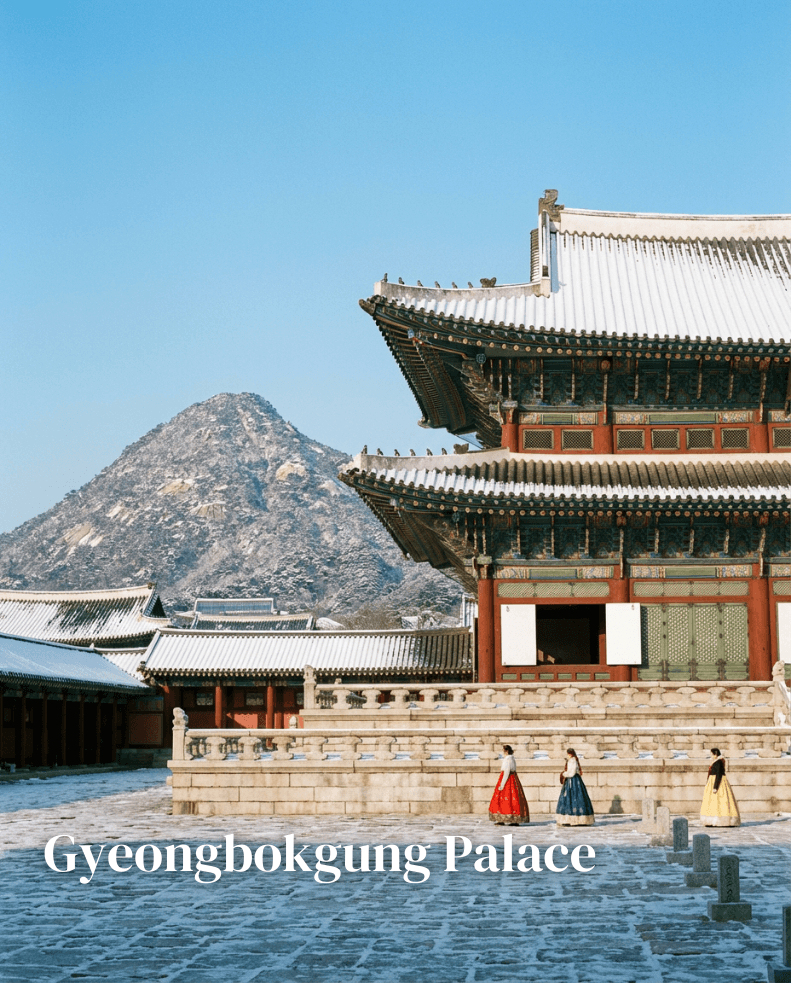

Location: Jongno-gu, Seoul | Category: Historic Palace | Best For: First-time visitors, History & Culture lovers
Seoul has five grand palaces from the Joseon Dynasty, and Gyeongbokgung (경복궁) is the largest and most recognized among them. It sits at the base of Bugaksan Mountain with a history stretching back to 1395 — six centuries of coronations, invasions, destruction, and careful restoration. This guide breaks down what to see within the palace walls, how the changing guard ceremony works, and the practical details you'll need to plan a smooth visit.

At a Glance
| Address | 161 Sajik-ro, Jongno-gu, Seoul (서울 종로구 사직로 161) |
| Hours | 9:00 AM - 5:00 PM (Nov-Feb) / 9:00 AM - 6:00 PM (Mar-May, Sep-Oct) / 9:00 AM - 6:30 PM (Jun-Aug) |
| Closed | Every Tuesday (open if Tuesday falls on a public holiday) |
| Admission | 3,000 KRW (~$2) for adults 25-64 / Free for ages 24 and under, 65 and over / Free with hanbok |
| Time Needed | 1.5 - 3 hours |
| Best Time | Weekday mornings, spring (cherry blossoms) or autumn (foliage) |
Why This Palace Matters
Gyeongbokgung, meaning "Palace Greatly Blessed by Heaven," was the primary court residence of the Joseon Dynasty from its founding in 1395. King Taejo ordered its construction as the political center of the new capital, Hanyang — present-day Seoul.
The palace was destroyed twice. First during the Imjin War invasions of 1592, then systematically demolished during the colonial period (1910–1945) when over 90% of its buildings were torn down. What you see today is the result of ongoing restoration that began in 1990. Roughly 40% of the initial layout has been rebuilt so far, according to the Cultural Heritage Administration of Korea.
That tension between destruction and recovery gives the place a weight that goes beyond architecture. Walking through the grounds, you're not just looking at reconstructed halls — you're seeing a deliberate act of cultural reclamation.

Main Structures Worth Your Time
The palace grounds cover around 40 hectares. You don't need to see everything, but a few key structures are worth slowing down for.
Geunjeongjeon (근정전) — The Throne Hall
The most formal building in the complex. Coronations, diplomatic audiences, and state ceremonies took place here. Notice the stone markers (pumgyeseok, 품계석) lining the open courtyard — these indicated where officials stood by rank during formal events. The double-tiered stone platform beneath the hall and the painted ceiling inside reflect period-accurate craftsmanship from the dynasty's peak.
Gyeonghoeru (경회루) — The Banquet Pavilion
A two-story wooden pavilion rising from a man-made lake. Joseon kings hosted state banquets and received foreign envoys here. The 48 stone pillars supporting the structure represent different aspects of Confucian cosmology. Early morning is the best time to photograph the pavilion — the water creates a near-perfect reflection when the surface is still.

Hyangwonjeong (향원정) — The Palace Garden Pavilion
A hexagonal pavilion on a small island in the palace's rear garden, connected to the shore by a graceful wooden bridge. King Gojong had it built in 1873 as a private retreat, and the surrounding garden was designed with the mountain backdrop in mind. On clear days, Bugaksan frames perfectly behind the pavilion — one of the most photographed angles in all of Seoul.

The Changing of the Guard
The Guard Changing Ceremony (수문장 교대의식) at Gwanghwamun Gate ranks among Seoul's most popular no-cost cultural events. Around 70 guards and 15 musicians in full period military attire perform the ritual twice daily.
Schedule:
| Event | Time | Duration |
| Changing Ceremony | 10:00 AM / 2:00 PM | ~20 min |
| Gwanghwamun Guard Duty | 11:00 AM / 1:00 PM | ~10 min |
| Guard Training | 9:35 AM / 1:35 PM | ~15 min |
The ceremony runs daily except Tuesdays and may be canceled in severe weather. No ticket required — you can watch from outside the gate without entering the palace. Aim for the 10 AM session. Fewer people, better angles. The 2 PM slot draws larger crowds due to peak visiting hours.
From April through December, the weekend Patrol Ceremony (순라의식) extends beyond the palace. A procession of guards and musicians marches from Gwanghwamun through Insadong, with the traditional military band playing arrangements that blend classical court music with modern K-pop melodies.
Getting There
Subway (recommended): Gyeongbokgung Station (Line 3), Exit 5. The exit leads directly to Gwanghwamun Gate — about a 3-minute walk.
Alternative: Gwanghwamun Station (Line 5), Exit 2. A 10-minute walk through Gwanghwamun Square.
By taxi: Show the driver "경복궁 광화문" on your phone. Expect ₩5,000–8,000 (~$4–6) from Myeongdong, ₩7,000–12,000 (~$5–9) from Gangnam. Rush hour traffic can double the time, so the subway is more reliable during peak commuting hours.
By bus: Routes 109, 171, 172, 272, and 602 stop near Gyeongbokgung. The Gyeongbokgung Palace bus stop is right outside the east wall.

Practical Tips
Hanbok = no charge. Rent one from the shops near Exit 4 of Anguk Station or along Samcheong-dong. Prices run ₩15,000–30,000 (~$11–22) for a 2-hour rental. Wearing hanbok also lets you skip the ticket line.
Go early on weekdays. The palace fills up noticeably by 11 AM, especially on weekends and during cherry blossom season (late March to mid-April). Arriving right at opening gives you quiet courtyards and uncluttered photos.
Wear comfortable shoes. The grounds mix gravel paths with uneven stone steps. If you rent hanbok, consider bringing a pair of flats to swap into.
Combination ticket. For ₩10,000 (~$7), the integrated pass covers Gyeongbokgung, Changdeokgung (including the Secret Garden), Changgyeonggung, Deoksugung, and Jongmyo Shrine. Valid for 3 months — buy it at any palace ticket booth.
Culture Day. Complimentary admission for everyone on the last Wednesday of each month.
Audio guide. Available in English, Japanese, Chinese, and other languages at the ticket booth. ₩3,000 rental with ID deposit.

Is It Worth It?
For ₩3,000 — or nothing at all if you show up in hanbok — Gyeongbokgung delivers one of Seoul's strongest cultural mornings. The scale of the grounds, the guard ceremony, and the mountain backdrop make it more than a checkbox attraction. Go if you want to understand Seoul's historical roots in a single visit. Skip if you've already toured multiple Joseon-era palaces and are short on time.
📌 Quick Reference
- Official site: royalpalace.go.kr
- Guard ceremony info: Korea Heritage Agency
- Info hotline: ☎ 02-3700-3900 (Korean/English, during operating hours)
- Combination ticket: Available at any palace ticket booth
- Location: 161 Sajik-ro, Jongno-gu, Seoul (서울 종로구 사직로 161)